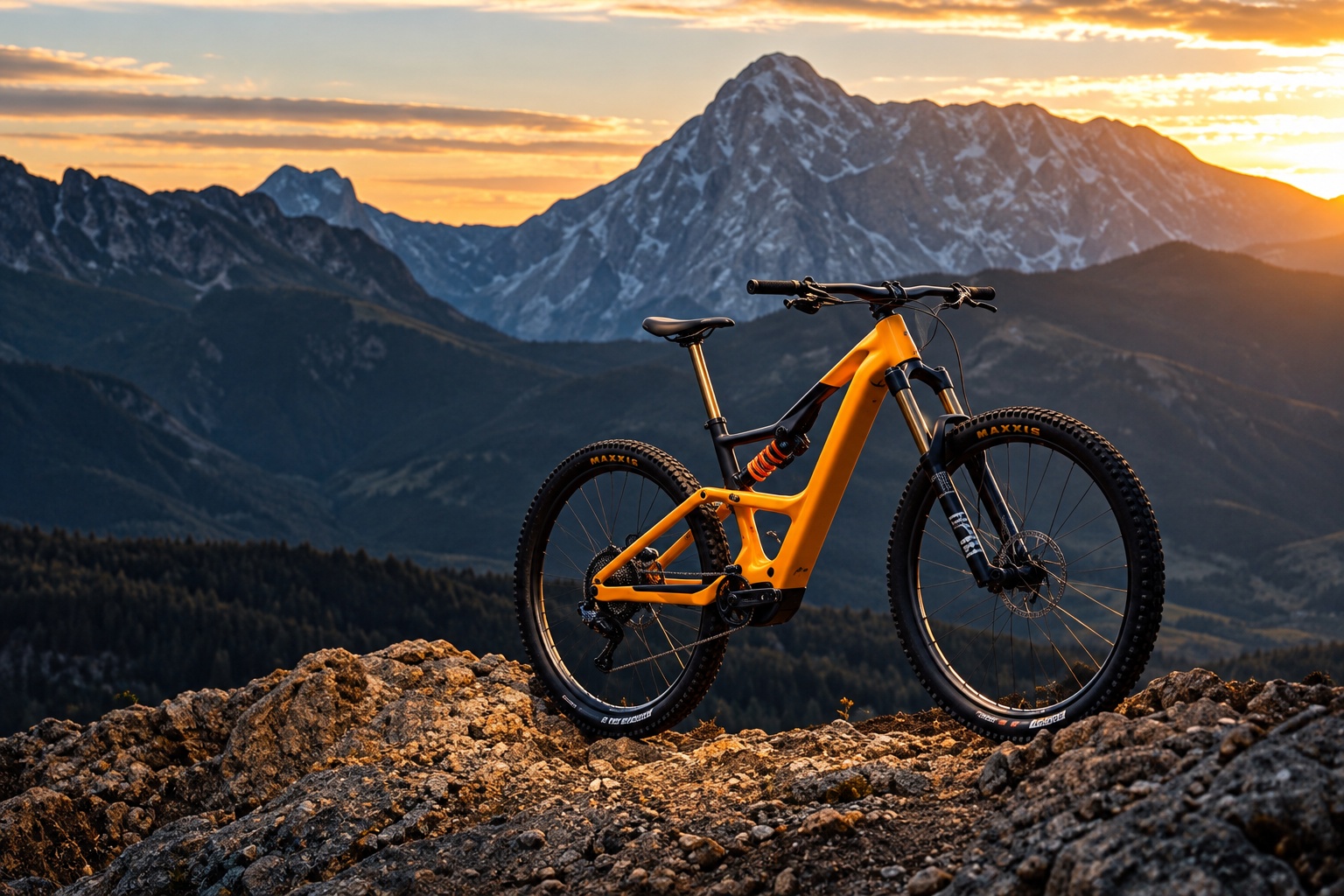
What Is a Full Suspension Mountain Bike?
A full suspension mountain bike is a bicycle fitted with suspension at both the front and rear.
The front suspension fork absorbs some of the impact from bumps at the front wheel, while a rear shock helps absorb impacts at the back wheel.
This design helps the bike maintain traction and control on uneven terrain, especially when riding on challenging mountain bike trails.
Main Features of a Full Suspension MTB
Front suspension fork
Rear suspension shock
A frame designed to accommodate rear suspension movement
Improved comfort on many rough and uneven trails
Better traction and control in demanding terrain when properly designed and set up
Advantages of Full Suspension Bikes
1. Improved comfort on rough terrain
The front fork and rear shock absorb some of the impacts caused by rocks, roots, potholes, and other obstacles. This can reduce the amount of vibration and impact transmitted to the rider.
2. Better traction on uneven surfaces
The rear suspension helps the back wheel follow the terrain, potentially improving grip when riding over bumps and obstacles.
3. More control on technical trails
A well-designed full suspension MTB can provide better control on steep descents, rocky trails, and uneven surfaces.
4. Suitable for demanding mountain biking
Full suspension bikes are popular among riders who regularly tackle technical trails, downhill routes, and challenging off-road terrain.
Disadvantages of Full Suspension Bikes
Usually more expensive than comparable hardtail bikes
More moving parts to maintain
Rear shocks and suspension linkages require servicing
Often heavier than comparable hardtail models
Some designs can lose a little pedalling efficiency through suspension movement, depending on the setup
A full suspension bike is worth considering if comfort and control on rough trails are your main priorities and your budget allows for the additional maintenance.
What Is a Hardtail Mountain Bike?
A hardtail mountain bike has suspension at the front but no rear suspension.
The rear wheel is attached to a rigid rear triangle of the frame. This simpler construction makes hardtails popular among beginners, recreational cyclists, commuters, and riders who want a versatile mountain bike.
Hardtails are available in different wheel sizes, including 26-inch, 27.5-inch, and 29-inch models.
Main Features of a Hardtail MTB
Front suspension fork on most mountain bike models
Rigid rear frame without a rear shock
Simpler construction
Generally easier maintenance
Often more affordable than comparable full suspension bikes
Advantages of Hardtail Bikes
1. More affordable
Hardtail mountain bikes are often less expensive than full suspension models with similar component quality. This makes them a practical option for buyers looking for an MTB on a budget.
2. Easier maintenance
With no rear shock or rear suspension linkage, there are fewer suspension components to inspect and service.
3. Efficient pedalling
Hardtails generally transfer pedalling effort efficiently because the rear of the frame does not move through a suspension system.
4. Good for everyday cycling
A hardtail can be suitable for estate roads, tarmac, gravel, murram roads, and moderate off-road trails, depending on its tyres and components.
5. Often lighter
Without the additional rear suspension mechanism, a hardtail can be lighter than a comparable full suspension bicycle.
Disadvantages of Hardtail Bikes
Less cushioning at the rear on rough terrain
Can feel harsher over repeated bumps and rocks
May provide less traction on very rough trails than a well-designed full suspension bike
Requires the rider to absorb more of the impact through body position and technique
For many people buying a mountain bike for everyday use in Kenya, a hardtail offers a good balance of affordability, simplicity, and versatility.
Full Suspension vs Hardtail: Main Differences
Feature
Full Suspension MTB
Hardtail MTB
Front suspension
Yes, typically
Yes, typically
Rear suspension
Yes
No
Riding comfort on rough trails
Generally better
More impact felt at the rear
Technical trail performance
Often better suited
Suitable for less demanding trails
Pedalling efficiency
Depends on design and setup
Generally very efficient
Maintenance
More involved
Simpler
Purchase price
Usually higher
Usually lower
Weight
Often heavier
Often lighter
Everyday commuting
Can work, depending on design
Often a practical choice
Best use
Demanding trails and rough terrain
Everyday riding, fitness and moderate trails
Actual performance depends on the bicycle's frame design, suspension quality, tyres, components, and setup.
Which Bike Is Better for Kenyan Roads?
The best choice depends on where and how you ride.
Hardtail MTB for Everyday Roads
A hardtail mountain bike is a good option for riders who use their bicycles on tarmac, estate roads, gravel, murram roads, and moderately rough surfaces.
It offers a straightforward design, efficient pedalling, and generally lower maintenance costs.
If you are buying a bicycle for commuting, fitness, or general riding, a hardtail is often a sensible starting point.
Full Suspension MTB for Rough Terrain
A full suspension mountain bike may be a better choice if you regularly ride rocky trails, uneven descents, technical off-road routes, and terrain with repeated large bumps.
The rear suspension can improve comfort and control when the bike is designed and set up for that type of riding.
However, not every full suspension bike is automatically better than every hardtail. A well-built hardtail can outperform a low-quality full suspension bike in reliability, weight, and overall value.
Is a Full Suspension Bike Worth the Extra Money?
It depends on your intended use.
If most of your riding takes place on ordinary roads, estate roads, and gravel, you may not need the additional complexity of rear suspension.
If you regularly tackle technical mountain bike trails, the extra comfort, traction, and control of a quality full suspension model may justify the higher cost.
When comparing prices, consider the quality of the frame, fork, rear shock, brakes, gears, wheels, and available replacement parts—not just the number of suspension components.
Which Is Better for Beginners?
For most beginners who want an affordable, versatile bicycle, a hardtail mountain bike is often the better starting point.
It is usually simpler to maintain, more affordable, and suitable for many common riding conditions.
A full suspension MTB can also suit a beginner, particularly if the rider intends to learn technical trail riding and has the budget for a quality model.
The most important factors are the correct frame size, dependable brakes, suitable tyres, and a bicycle that matches your riding needs.
Can You Get Full Suspension and Hardtail Bikes in 27.5 and 29-Inch Sizes?
Yes. Both full suspension and hardtail mountain bikes can use different wheel sizes, including 27.5-inch and 29-inch wheels.
The wheel size and suspension type describe different aspects of the bicycle.
27.5-inch MTB: Refers to the nominal wheel size.
29er MTB: Refers to a mountain bike designed for 29-inch wheels.
Hardtail MTB: Refers to a bicycle with front suspension but no rear suspension.
Full suspension MTB: Refers to a bicycle with both front and rear suspension.
For example, you can have a 27.5-inch hardtail, a 29er hardtail, a 27.5-inch full suspension MTB, or a 29er full suspension MTB.
The right combination depends on your height, riding style, terrain, and budget.
How to Maintain Your Mountain Bike
Whichever type you choose, regular maintenance is important.
Hardtail Maintenance
Keep the chain clean and lubricated.
Check tyre pressure before riding.
Inspect the brakes and brake pads.
Check the front suspension fork according to the manufacturer's instructions.
Inspect the wheels, spokes, and fasteners.
Full Suspension Maintenance
In addition to the routine checks above:
Inspect the rear shock for leaks or damage.
Check suspension linkage bolts according to the manufacturer's specifications.
Keep suspension components clean.
Follow the recommended service intervals for the front fork and rear shock.
Have unusual noises, looseness, or suspension problems checked by a qualified mechanic.
Proper maintenance improves reliability and helps keep the bicycle safe to ride.
Where to Buy Mountain Bikes in Nairobi, Kenya
If you are looking for a mountain bike in Kenya, compare the available models based on your budget, preferred wheel size, riding conditions, and maintenance needs.
Nairobi Mart Wholesalers serves customers looking for bicycles for everyday cycling, fitness, recreation, and off-road riding.
Physical location: Ngara, Nairobi, along Murang'a Road, past KICD, next to Life Mission Christian Church (LMCC).
Contact us to enquire about available mountain bike models, specifications, prices, and delivery options.
Final Verdict: Full Suspension or Hardtail?
Choose a hardtail mountain bike if you want a practical, efficient, generally more affordable bicycle for commuting, fitness, gravel roads, and moderate off-road riding.
Choose a full suspension mountain bike if you regularly ride challenging trails and want additional rear-wheel cushioning, traction, and control.
Neither type is universally better. The best mountain bike is the one that suits your riding conditions, fits your body correctly, meets your performance requirements, and offers good value for your budget.
Looking for a mountain bike in Nairobi or elsewhere in Kenya? Explore the available models at Nairobi Mart Wholesalers and choose the right bike for your next ride.
Frequently Asked Questions
What is the main difference between a full suspension and a hardtail bike?
A full suspension bike has suspension at both the front and rear, while a hardtail generally has front suspension only and a rigid rear frame.
Is a hardtail MTB good for rough roads?
Yes. A hardtail with suitable tyres and front suspension can handle many rough roads, gravel routes, and moderate trails. More demanding terrain may benefit from full suspension.
Is a full suspension MTB harder to maintain?
Generally, yes. It has additional components, including a rear shock and suspension linkages, that require inspection and periodic servicing.
Which mountain bike is cheaper?
Hardtail mountain bikes are generally cheaper than comparable full suspension models, although the actual price depends on component quality and brand.
Can a hardtail MTB be used for daily commuting?
Yes. Hardtails can be practical for everyday commuting, particularly on roads with potholes, gravel, and uneven surfaces.
Is full suspension better for downhill riding?
A properly designed full suspension bike is generally better suited to demanding downhill trails because the rear suspension can improve traction, comfort, and control.
Can I convert a hardtail into a full suspension bike?
Not simply by adding a rear shock. A full suspension frame must be specifically engineered to accommodate rear suspension movement. Converting an ordinary hardtail frame is generally impractical and unsafe.
Nairobi Mart Blog
Full Suspension vs Hardtail Mountain Bike: What Is the Difference?
16 Oct 2026